
Lymphatic Massage for Tummy Tuck Recovery
Table of Contents
- What Lymphatic Massage Does After a Tummy Tuck
- Post-Tummy Tuck Swelling Timeline: What to Expect Week by Week
- How to Prevent Fibrosis After Tummy Tuck Surgery
- Lymphatic Massage Frequency After Surgery: How Many Sessions?
- DIY vs. Professional Lymphatic Drainage Sessions
- Contraindications and Red Flags to Discuss With Your Surgeon
- Conclusion
- Frequently Asked Questions
Last Updated: September 30, 2026
What Lymphatic Massage Does After a Tummy Tuck
Lymphatic massage for tummy tuck recovery is a gentle, hands-on technique that helps your body move trapped fluid away from the surgical site. After an abdominoplasty, your lymphatic system often can't keep up with the extra fluid your body produces. This is where targeted drainage work helps.
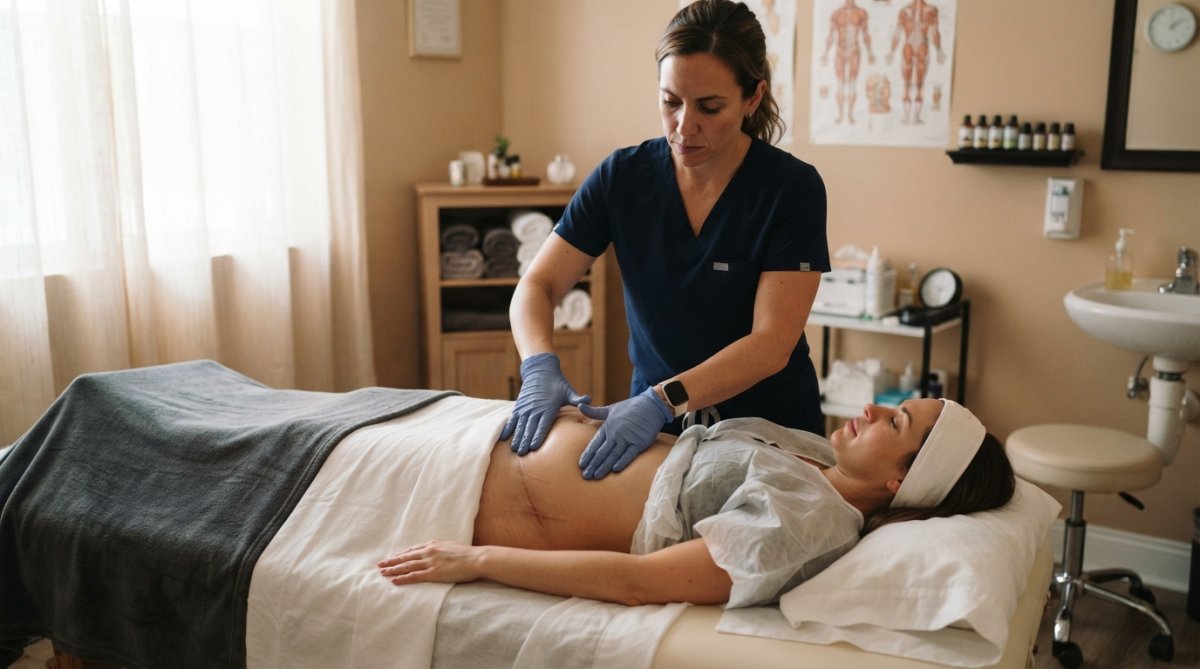
Here's what the treatment actually does:
- Eases postoperative swelling by guiding fluid toward working lymph nodes
- Reduces bruising and fluid retention around the abdomen
- Helps prevent fibrosis, the hard tissue that can form under the skin
- Supports wound healing by improving circulation to the area
- Relieves the tight, heavy feeling that makes moving uncomfortable
The technique uses light pressure, not deep force.
Cleveland Clinic overview of lymphatic drainage
Post-Tummy Tuck Swelling Timeline: What to Expect Week by Week
Most tummy tuck swelling peaks in the first week and then drops steadily over the next several months. Knowing the pattern helps you tell normal recovery from something worth a call to your surgeon.
Here's the general shape of it:
| Timeframe | What's Happening | What Helps |
|---|---|---|
| Week 1-2 | Swelling peaks; drains may still be in | Rest, compression, short walks |
| Week 3-4 | Bruising fades; swelling starts to drop | Gentle activity, hydration |
| Week 5-8 | Swelling reduces noticeably | Lymphatic massage, compression |
| Month 3-6 | Firmness softens; contour settles | Consistent drainage sessions |
When Swelling Peaks and When It Starts to Drop
Swelling is usually at its worst in the first several days after surgery. From there it eases gradually, but the process is not linear. Many patients notice good days followed by puffy ones, especially after sitting or standing too long.
How to Prevent Fibrosis After Tummy Tuck Surgery
Fibrosis is the formation of hard, firm tissue under the skin as the body lays down scar tissue. It's one of the most common concerns after a tummy tuck, and one of the most treatable when caught early.
Warning Signs of Hardening Tissue
Watch for these signs and mention them at your next appointment:
- Areas that feel ropey, lumpy, or unusually firm
- Skin that dimples or pulls when you move
- Sections that stay hard while the rest softens
- Pain or tightness that gets worse, not better
Lymphatic Massage Frequency After Surgery: How Many Sessions?
There is no single number that fits everyone, but there is a predictable shape to how most post-tummy-tuck drainage plans are built. Frequency is driven by three variables: how much fluid you are holding, how your incisions are healing, and whether your surgeon placed drains.
A common pattern looks like this:
| Phase | Typical Frequency | Session Length | Primary Goal |
|---|---|---|---|
| Weeks 1-2 (once cleared) | 2-3 sessions per week | 45-60 minutes | Move acute fluid, protect incisions |
| Weeks 3-4 | 2 sessions per week | 45-60 minutes | Reduce bruising, start softening edges |
| Weeks 5-8 | 1-2 sessions per week | 45-60 minutes | Break up early fibrosis, refine contour |
| Months 3-6 | Weekly to biweekly | 45-60 minutes | Maintain results, address stubborn areas |
| Month 6+ | As needed | 45-60 minutes | Touch-ups around flare-ups |
What Changes Your Session Count
- Drain status. If your surgeon is still running Jackson-Pratt drains, many providers wait until they are pulled before starting abdominal work.
- Procedure type. A full abdominoplasty with muscle repair typically needs more sessions than a mini tuck.
- Concurrent liposuction. Flank or hip lipo adds fluid load and usually extends the schedule by two to four weeks.
- Fibrosis present at intake. Firm, bound-down tissue needs more frequent early sessions, not fewer.
- Your own movement. Patients who walk short, frequent distances between sessions tend to need less hands-on work.
When to Add Sessions, When to Taper
Add a session when you notice a new pocket of swelling, a firm spot that was not there last week, or a sudden increase in the tight, heavy feeling after a day of activity. Taper when two consecutive sessions produce no visible change in contour or firmness, that is the signal your body has caught up.
What Sessions Typically Cost
Pricing for lymphatic drainage sessions varies. Many practices offer post-op packages. Check your post-op paperwork to see if your surgeon includes a set number of sessions in the surgical fee before booking independently.
When to Pause, Not Book
Do not schedule a session, and call your surgeon instead, if you have a fever, a new area of redness or warmth, fluid leaking from an incision, or sudden one-sided swelling. Those are signs of infection, seroma, or a clot, and massage is the wrong tool for any of them.
DIY vs. Professional Lymphatic Drainage Sessions
Most guides on this topic stay vague on purpose: they tell you self-massage is "a supplement, not a substitute" and stop there. That leaves patients either doing nothing at home or pressing too hard on healing tissue. Here is the specific version.
Safe Self-Massage You Can Do at Home (Once Cleared)
The rule for self-massage is the same as for professional work: light pressure, direction toward working lymph nodes, and never over an incision that has not fully closed.
- Neck and collarbone first. Using flat fingertips, make gentle circular strokes just above the collarbone for 30-60 seconds. This opens the terminal drainage point everything else feeds into.
- Armpits (axillary nodes). With light pressure, stroke from the outer breast toward the armpit, 10-15 slow passes per side.
- Groin (inguinal nodes). Stroke from the lower abdomen toward the crease of the leg, 10-15 slow passes per side.
- Abdomen, only if cleared. With the flat of your hand, stroke gently from the center of the belly outward toward the groin and flanks. No kneading, no deep circles, no pressing into the incision line.
What Self-Massage Cannot Do
- It cannot reach the deeper tissue planes where seromas and early fibrosis form.
- It cannot detect a fluid pocket that needs to be drained by your surgeon.
- It cannot calibrate pressure to your specific healing stage the way a trained therapist can.
- It cannot address the back, flanks, and upper thighs in the coordinated sequence a full MLD session uses.
When to See a Professional Instead
Book with a trained provider, ideally one with post-surgical certification, if any of the following apply:
- You are within the first two weeks of clearance and swelling is still high.
- You feel firm, ropey, or lumpy areas under the skin.
- Your surgeon has flagged a seroma or is monitoring one.
- You had concurrent liposuction or a full abdominoplasty with muscle repair.
- You are not confident you can keep pressure light enough on your own.
How to Vet a Provider
Ask three questions before booking: Are you trained in manual lymphatic drainage (not just "post-op massage")? Do you work with tummy tuck patients weekly? Will you coordinate with my surgeon if something looks off? A provider who hesitates on any of those is not the right fit for post-surgical care.
Contraindications and Red Flags to Discuss With Your Surgeon
Lymphatic massage isn't right for everyone, and timing matters. Certain conditions mean you should wait or skip it entirely.
Talk to your surgeon before booking if you have:
-
An active infection or fever
-
Blood clots or a history of clotting issues
-
Unhealed incisions or open wounds
-
Heart or kidney conditions affecting fluid balance
-
Surgical drains still in place
-
Sudden swelling on one side only
-
Warm, red, or increasingly painful areas
-
Shortness of breath
-
Fluid leaking from the incision
Conclusion
Recovering from a tummy tuck takes time, and swelling that lingers can feel discouraging. The right support makes that stretch more comfortable and helps protect your results.
Frequently Asked Questions
When should I start lymphatic massage after a tummy tuck?
Most surgeons clear patients for gentle lymphatic massage within the first week or two after surgery, once surgical drains are managed and incisions are stable. Some patients begin as early as 48 to 72 hours post-op with light, targeted work. Always get written clearance from your plastic surgeon first, since timing depends on your procedure, drain status, and healing progress. Starting early with light pressure supports lymphatic flow and helps reduce postoperative swelling before it hardens into fibrosis.
How many lymphatic massage sessions are needed after a tummy tuck?
Session frequency depends on your healing stage. A common pattern is two to three sessions per week during the first two to four weeks, then weekly sessions through weeks six to eight, tapering as swelling resolves. Some patients need ongoing maintenance for fibrosis or fluid retention. Your therapist should adjust the plan based on your abdominoplasty recovery, compression garment use, and how your tissue responds between visits.
Can lymphatic massage prevent fibrosis after surgery?
Manual lymphatic drainage helps move excess fluid and can reduce the tissue hardening that leads to fibrosis, but it works best alongside compression garments, gentle activity, and your surgeon's post-op instructions. Fibrosis forms when fluid and proteins sit in the tissue too long. Consistent light-pressure massage in the early weeks supports lymphatic flow and softens developing scar tissue. It is not a guarantee, but it is one of the most effective non-invasive tools for managing fibrosis risk.
Is lymphatic massage painful after abdominal surgery?
Lymphatic massage uses light pressure, not deep tissue techniques. Most patients describe it as soothing rather than painful. You may feel mild tugging near incisions or tender areas, especially in the first few sessions. A trained therapist adjusts pressure to your comfort and healing stage. If a session causes sharp pain or leaves you sore for days, the pressure was too deep. Report any unusual discomfort to your surgeon.